


University of North Carolina Athletics
Extra Points: Memory Lane
September 30, 2026 | Football
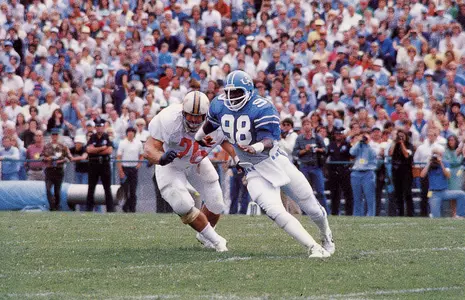
Ray Perkins, Bill Parcells and Bill Belichick were having a discussion before a New York Giants training camp scrimmage in July 1981. The subject was the rookie outside linebacker from North Carolina, Lawrence Taylor. Perkins (the head coach), Parcells (the defensive coordinator) and Belichick (the linebackers coach) came to a consensus.
"We had some linebackers, so we were okay," Belichick remembers. "We said we'd bring him along slowly. We didn't want to give him too much. He would be involved in some coverage stuff, which he'd never done before. There were some things he had to learn in the passing game."
Three hours later, they reconvened. They'd just watched Taylor shred every blocker. He'd chewed up and spit out every ball carrier. He laid waste to the quarterback.
"We agreed, 'Get him in there,'" Belichick says. "He's our best player. He was un-blockable. Bring him along? No, he's ready."
Soon Taylor's teammates started calling him "Superman" and they joked with managers that Taylor's locker should be replaced with a phone booth. Parcells converted the base defense from a traditional 4-3 scheme to a 3-4 alignment to unleash Taylor at outside linebacker.
For the next decade (four as linebackers coach and six as defensive coordinator), Belichick had a front-row seat as LT ravaged the NFL, winning two Super Bowls, three NFL Defensive Player of the Year awards and piling up a career total of 142 sacks.
"He played every game, every snap, he never came out," Belichick says. "He was on all six special teams. He never wanted to come off the field. He was a lot of fun to coach. He was a great competitor. He was unbelievably instinctive. He knew what was going to happen. He based it on how scared the guy across from him was. If the guy was scared, he had to block LT and he was scared. If the quarterback was scared, it was a pass."
Belichick pauses telling the story. He smiles.
"How could he tell all of that? I don't know. But he could."
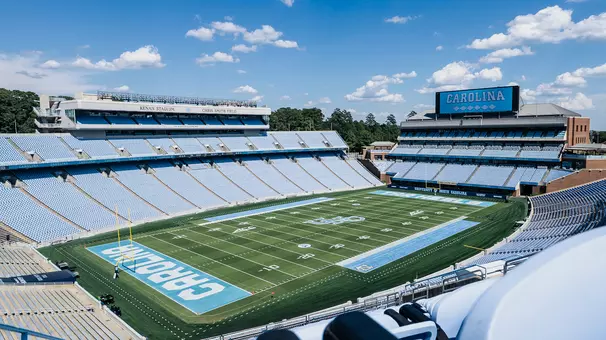
This week is all about a big game on the Tar Heels' schedule with No. 3 ranked and 4-0 Notre Dame coming to Kenan Stadium for a noon kickoff on Saturday.
It's also about looking back and reflecting on some of the great players and coaches in Tar Heel history. This weekend will mark the unveiling of a display in the east end of the stadium recognizing three coaches and nine players who have been named to either the College Football Hall of Fame or the Pro Football Hall of Fame.
The brick façade separating the seating in the Blue Zone from the lower bowl of Kenan Stadium provides space for panels to be permanently mounted designating the numbers that the players wore or the name of the coach. The College Football Hall of Fame honorees will be designated on the northeast corner, the Pro Football Hall of Fame inductees on the southeast corner.
The players are Charlie "Choo Choo" Justice, Art Weiner, Chris Hanburger, Don McCauley, Lawrence Taylor, William Fuller, Harris Barton, Dré Bly and Julius Peppers (Taylor is in the Pro Football Hall of Fame, Peppers is in both and the others are in the College Football Hall of Fame). The three coaches in the College Football Hall of Fame are Carl Snavely, Jim Tatum and Mack Brown.
The seven individuals still living have been invited to attend and families of the others have been invited as well. Expected to attend are family members of Justice, Weiner and Tatum. Hall of Famers expected are Hanburger, McCauley, Fuller, Barton and Brown. Taylor has a conflict with the Giants' 40-year Super Bowl champion team reunion, and Bly is on the coaching staff at South Carolina.
The Hall of Fame display was taken at the initiative of Belichick, whose father Steve coached at Carolina in the mid-1950s and who has made efforts since taking the Carolina job in late 2024 to make elements of Tar Heel history more visible around the program, Kenan Football Center and Kenan Stadium.
Now on display on the first floor of Kenan Football Center are bas-relief, bronze busts of each of the players in either of the halls of fame. There is also a display just outside the players' locker room of Tar Heel uniforms over the last three quarters of a century.
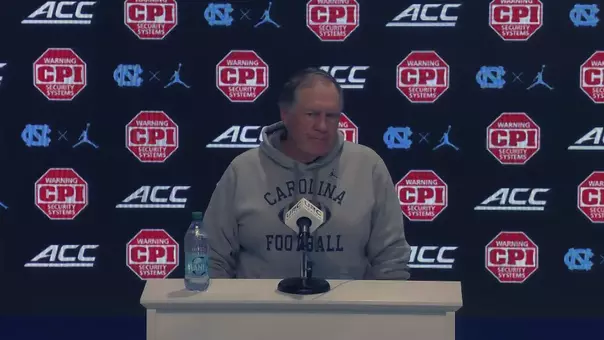
"It's important to play tribute to the all of the players and coaches who have made this program what it is," says Belichick. "We've tried to make our players aware of all of the great history of this program. We don't want to live in the past, but we certainly want to recognize it."
Belichick's career has crossed the paths of several of the Tar Heels to be honored on Saturday. He was a first-year coach in 1975 with the Baltimore Colts when McCauley and fellow ex-Tar Heels Ken Huff and Robert Pratt were on the team.
"All three were good guys and good players and I enjoyed being around them," Belichick says. "Don was a very unusual player, I can't really think of another like him. Lydell Mitchell was our starting running back, and Don was used in short-yardage and goal-line situations, and he was used on third down as a pass receiver. That's a pretty unusual situation. Usually the short-yardage guy is not a third-down guy and vice versa. He had a great attitude, was very smart and dependable and very detail-oriented."
Belichick remembers the Colts holding three training camp scrimmages against the Washington Redskins, who were led on defense by Hanburger, the former Tar Heel from the early 1960s. Despite being an 18th-round draft pick, Hanburger earned nine Pro Bowl selections over 14 years and led the Redskins to Super Bowl XII.
"Chris was a great player, of course, but what struck me was how he was a coach on the field and very much in charge of the Redskins defense," Belichick says. "He made the calls, he made the checks. He did everything. He ran the show."
One of Belichick's six Super Bowl victories as head coach of the New England Patriots came against Peppers and the Carolina Panthers in Super Bowl XXXVIII in February 2004. The Patriots won, 32-29, and were careful on offense to stay away from Peppers, who managed only two solo tackles.
"Lucky they were in the NFC, and we didn't have to see him that often," Belichick says. "But I saw enough of him in that game. He was like LT—almost un-blockable. You had to know where Peppers was on every play. He had a good motor and was very hard to block. He had great balance, quickness and speed. Plus, there was his length, his ability to get in the passing lane and tip balls. You've really had to account for him."
It's by grand design, then, that among the wall adornments in Belichick's office in the Kenan Football Center are large photos of Taylor, Peppers and Hanburger—as Tar Heels and as pros.
"There's a great story with each of these guys," he says. "You bring a recruit in here and talk about the qualities they brought to the game. They're all very impressive."
One of the honorees who'll be in attendance Saturday is Brown, now retired and living half the year in Texas and half in Linville in the mountains of North Carolina, and one of the descendants will be Jim Tatum Jr., who'll join his two sisters and extended Tatum family members in Chapel Hill this weekend.
"I'm honored to be a part of this," says Brown. "I love the University of North Carolina and have so many great memories in Kenan Stadium. I spent 16 years of my life there and have a lot of friends and former players who are still important to me."
Tatum Jr. has two degrees from Carolinas—1968 B.A. in sociology and 1974 UNC School of Law. After a career as a partner with the law firm Moore & Van Allen, he's retired and living in Durham. He has fond memories of selling Cokes in Kenan Stadium as a 10-year-old boy during his dad's 1956-58 tenure that was cut tragically short by Tatum Sr.'s death in the summer of 1959.
"I think it's a tremendous gesture by the football program and the University," says Tatum. "My dad would be honored to be included and recognized. He got into the Hall of Fame more for his accomplishments at Maryland (he won the 1953 national championship), but his heart was always at UNC from his days as a player until the day he died."
Lee Pace (Carolina '79) has written about Tar Heel football under the "Extra Points" banner since 1990 and is the author of "Football in a Forest—The Life and Times of Kenan Stadium."
"We had some linebackers, so we were okay," Belichick remembers. "We said we'd bring him along slowly. We didn't want to give him too much. He would be involved in some coverage stuff, which he'd never done before. There were some things he had to learn in the passing game."
Three hours later, they reconvened. They'd just watched Taylor shred every blocker. He'd chewed up and spit out every ball carrier. He laid waste to the quarterback.
"We agreed, 'Get him in there,'" Belichick says. "He's our best player. He was un-blockable. Bring him along? No, he's ready."
Soon Taylor's teammates started calling him "Superman" and they joked with managers that Taylor's locker should be replaced with a phone booth. Parcells converted the base defense from a traditional 4-3 scheme to a 3-4 alignment to unleash Taylor at outside linebacker.
For the next decade (four as linebackers coach and six as defensive coordinator), Belichick had a front-row seat as LT ravaged the NFL, winning two Super Bowls, three NFL Defensive Player of the Year awards and piling up a career total of 142 sacks.
"He played every game, every snap, he never came out," Belichick says. "He was on all six special teams. He never wanted to come off the field. He was a lot of fun to coach. He was a great competitor. He was unbelievably instinctive. He knew what was going to happen. He based it on how scared the guy across from him was. If the guy was scared, he had to block LT and he was scared. If the quarterback was scared, it was a pass."
Belichick pauses telling the story. He smiles.
"How could he tell all of that? I don't know. But he could."
This week is all about a big game on the Tar Heels' schedule with No. 3 ranked and 4-0 Notre Dame coming to Kenan Stadium for a noon kickoff on Saturday.
It's also about looking back and reflecting on some of the great players and coaches in Tar Heel history. This weekend will mark the unveiling of a display in the east end of the stadium recognizing three coaches and nine players who have been named to either the College Football Hall of Fame or the Pro Football Hall of Fame.
The brick façade separating the seating in the Blue Zone from the lower bowl of Kenan Stadium provides space for panels to be permanently mounted designating the numbers that the players wore or the name of the coach. The College Football Hall of Fame honorees will be designated on the northeast corner, the Pro Football Hall of Fame inductees on the southeast corner.
The players are Charlie "Choo Choo" Justice, Art Weiner, Chris Hanburger, Don McCauley, Lawrence Taylor, William Fuller, Harris Barton, Dré Bly and Julius Peppers (Taylor is in the Pro Football Hall of Fame, Peppers is in both and the others are in the College Football Hall of Fame). The three coaches in the College Football Hall of Fame are Carl Snavely, Jim Tatum and Mack Brown.
The seven individuals still living have been invited to attend and families of the others have been invited as well. Expected to attend are family members of Justice, Weiner and Tatum. Hall of Famers expected are Hanburger, McCauley, Fuller, Barton and Brown. Taylor has a conflict with the Giants' 40-year Super Bowl champion team reunion, and Bly is on the coaching staff at South Carolina.
The Hall of Fame display was taken at the initiative of Belichick, whose father Steve coached at Carolina in the mid-1950s and who has made efforts since taking the Carolina job in late 2024 to make elements of Tar Heel history more visible around the program, Kenan Football Center and Kenan Stadium.
Now on display on the first floor of Kenan Football Center are bas-relief, bronze busts of each of the players in either of the halls of fame. There is also a display just outside the players' locker room of Tar Heel uniforms over the last three quarters of a century.
"It's important to play tribute to the all of the players and coaches who have made this program what it is," says Belichick. "We've tried to make our players aware of all of the great history of this program. We don't want to live in the past, but we certainly want to recognize it."
Belichick's career has crossed the paths of several of the Tar Heels to be honored on Saturday. He was a first-year coach in 1975 with the Baltimore Colts when McCauley and fellow ex-Tar Heels Ken Huff and Robert Pratt were on the team.
"All three were good guys and good players and I enjoyed being around them," Belichick says. "Don was a very unusual player, I can't really think of another like him. Lydell Mitchell was our starting running back, and Don was used in short-yardage and goal-line situations, and he was used on third down as a pass receiver. That's a pretty unusual situation. Usually the short-yardage guy is not a third-down guy and vice versa. He had a great attitude, was very smart and dependable and very detail-oriented."
Belichick remembers the Colts holding three training camp scrimmages against the Washington Redskins, who were led on defense by Hanburger, the former Tar Heel from the early 1960s. Despite being an 18th-round draft pick, Hanburger earned nine Pro Bowl selections over 14 years and led the Redskins to Super Bowl XII.
"Chris was a great player, of course, but what struck me was how he was a coach on the field and very much in charge of the Redskins defense," Belichick says. "He made the calls, he made the checks. He did everything. He ran the show."
One of Belichick's six Super Bowl victories as head coach of the New England Patriots came against Peppers and the Carolina Panthers in Super Bowl XXXVIII in February 2004. The Patriots won, 32-29, and were careful on offense to stay away from Peppers, who managed only two solo tackles.
"Lucky they were in the NFC, and we didn't have to see him that often," Belichick says. "But I saw enough of him in that game. He was like LT—almost un-blockable. You had to know where Peppers was on every play. He had a good motor and was very hard to block. He had great balance, quickness and speed. Plus, there was his length, his ability to get in the passing lane and tip balls. You've really had to account for him."
It's by grand design, then, that among the wall adornments in Belichick's office in the Kenan Football Center are large photos of Taylor, Peppers and Hanburger—as Tar Heels and as pros.
"There's a great story with each of these guys," he says. "You bring a recruit in here and talk about the qualities they brought to the game. They're all very impressive."
One of the honorees who'll be in attendance Saturday is Brown, now retired and living half the year in Texas and half in Linville in the mountains of North Carolina, and one of the descendants will be Jim Tatum Jr., who'll join his two sisters and extended Tatum family members in Chapel Hill this weekend.
"I'm honored to be a part of this," says Brown. "I love the University of North Carolina and have so many great memories in Kenan Stadium. I spent 16 years of my life there and have a lot of friends and former players who are still important to me."
Tatum Jr. has two degrees from Carolinas—1968 B.A. in sociology and 1974 UNC School of Law. After a career as a partner with the law firm Moore & Van Allen, he's retired and living in Durham. He has fond memories of selling Cokes in Kenan Stadium as a 10-year-old boy during his dad's 1956-58 tenure that was cut tragically short by Tatum Sr.'s death in the summer of 1959.
"I think it's a tremendous gesture by the football program and the University," says Tatum. "My dad would be honored to be included and recognized. He got into the Hall of Fame more for his accomplishments at Maryland (he won the 1953 national championship), but his heart was always at UNC from his days as a player until the day he died."
Lee Pace (Carolina '79) has written about Tar Heel football under the "Extra Points" banner since 1990 and is the author of "Football in a Forest—The Life and Times of Kenan Stadium."

Tuesday, September 29
Monday, September 28
Monday, September 28
Monday, September 28