University of North Carolina Athletics
November 24, 2026 | Men's Basketball, Featured Writers, Adam Lucas
A visit from King Rice reminded us what Carolina can do for an individual.
By Adam Lucas
King Rice was perfect.
Well, not really. He was decidedly not perfect, as he will be quick to tell you.
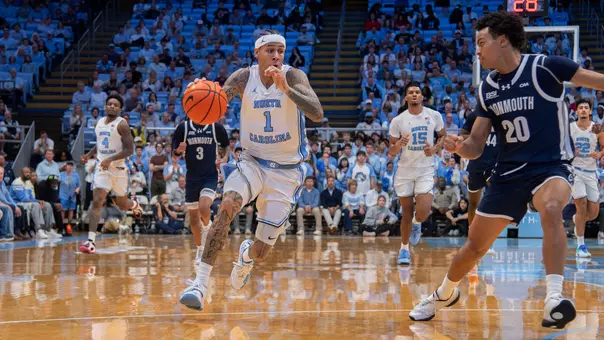
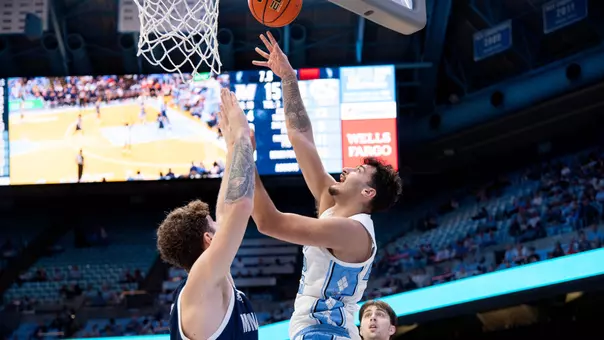
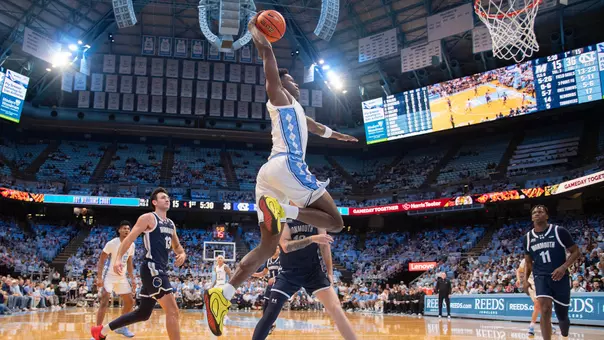
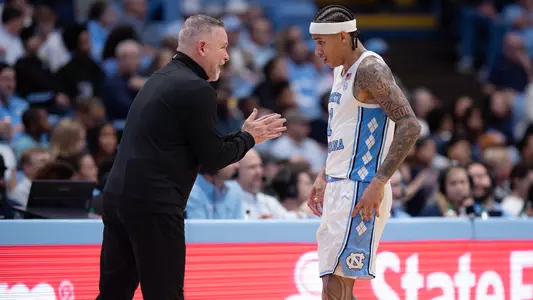
But he was perfect for what we needed him to be. Rice rolled into Chapel Hill on Monday night with a Monmouth team that ultimately absorbed an 85-45 defeat to this year's Tar Heels, exactly what Carolina had to do before embarking on a tougher two-game stretch against West Virginia and Arkansas.
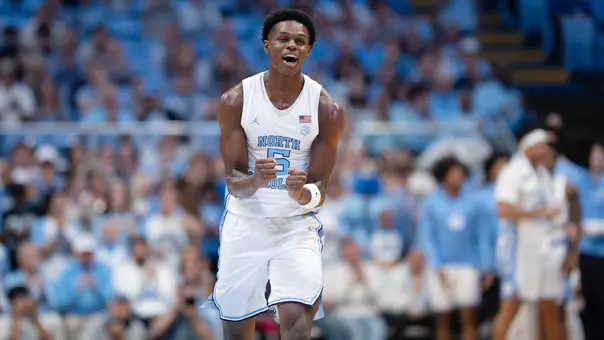
There were plenty of highlights for this year's version of the Tar Heels. Terrence Brown had his third straight 20-point scoring game. Alex Samodurov had his first career double-double. Kevin Thomas got his first extended opportunity and showed some flashes.
For many of those in attendance, though, the highlight was when Rice and assistant coaches Brian Reese and Shammond Williams were introduced before the Monmouth starting lineups. The trio received a nice ovation, just as they should have.
And why not? Combined, those three played 408 games for the University of North Carolina. After Monday night's game, this year's entire 16-player roster combined has played 154 games for the University of North Carolina—or roughly the same as Rice's career total of 140.
You looked around Monday night and saw players from every era of the Tar Heel basketball program. One-name and nickname guys like Luuuuuke and The Jet and Sheed and Phil and JR. We love all those guys because we know the whole story that goes with each of them. We lived through the bad times and the good times with them. We got to know them. And Rice fits perfectly right into that category, because he arrived as a brash teenager, had some early struggles, tormented Bobby Hurley (the great Duke point guard had 32 combined turnovers in five career meetings with Rice) and ended his UNC career in the 1991 Final Four, which snapped a Final Four drought that was approaching a decade.
Who was the King Rice who came to Chapel Hill? He was this guy:
When I was in high school, I thought I was pretty cool, he said. I had this cool way of answering the phone: 'Yo, this is King!' One day I answered the phone and I said, 'Yo, this is King!' with all that attitude.
The voice on the other end said, 'King, this is Dean Smith.'
When he tells this story, Rice pauses here and looks appropriately horrified.
I said, 'Oh, let me go get King. Because this isn't King at all.' And then I walked away and came back to the phone and said, 'Hello, Coach, this is King, and I was just in the hall practicing my dribbling.'
Because he came to Carolina, because he spent four years here, we got to know that young, immature freshman. And we know all the stories about King Rice in Chapel Hill. But we also know that since then he has consistently talked about the difference being part of this program has made in his life.
When I came down to Carolina, all of a sudden I was trying to have more alcohol than any kid on campus, Rice says. That was really bad for me because my family had problems with alcohol. But Coach Smith never gave up on me. Even when a lot of people did give up on me, Coach Smith kept saying that I was a good kid making bad decisions. He told everybody that it was Carolina basketball's job to help me, because that is what the coaching staff had promised my family. That saved my life.
That's what we want and that's what makes us proud. We want to get to know these basketball players, and we want them to become more than basketball players to us because along the way they had some of the same experiences in Chapel Hill that so many people who never picked up a basketball also did. Hearing Rice talk about the last three decades of his life, it's very obvious that Carolina changed his life and continues to impact it today.
Winning is incredibly important. Carolina basketball has a platform on the landscape of college sports—and in the lives of so many of us—because the program has won at an extraordinarily high level. This isn't a charity. It's a winner.
But those wins wouldn't feel quite the same if we didn't know the stories that go along with all the people who accumulated the achievements. Jimmy Black, who was there on Monday night, convened a team meeting before the 1982 season and told his teammates they were going to win a title for Smith. Shammond Williams didn't have a scholarship offer out of high school and five years later (including a prep school year) was one of the most important players on a team that also included Vince Carter and Antawn Jamison. Luke Maye rarely played as a freshman and then hit one of the biggest shots in Tar Heel basketball history as a sophomore and spent his entire career making an impact on the lives of numerous kids who were patients at the Children's Hospital.
We've known almost all of them as more than players. The question in 2026 is whether we can know the current Tar Heels the same way. Can Carolina still be a place that wins games but also changes lives if players are only part of the program for nine months at a time? And a very important related question: if that time in college sports history is gone and it's not coming back, is simply winning the games enough to make this whole enterprise as essential to all of our lives?
It's Michael Malone's job—and he takes it very seriously—to find players who want to be part of the entire experience. He's already turned down potential players who made it clear Chapel Hill was a stopover to them. Then it's his job to take those players and win a whole bunch of games. Everything about his career suggests that he is indeed going to win at a very high level.
Then there are numerous other people who have essential roles. And then, way down the list, is me. While they're winning, it's my job to help you get to know them. We may not have four years anymore. You could watch Monday night's game and realize Brown is a great scorer with a lightning quick first step. We have to figure out ways to accelerate the process of telling you about who he is and why he's here, no matter how long his stay ultimately might be. I can sit here and complain about missing the era when we had four years to tell you about King Rice's life story or I can get on with explaining Brown's incredible family story or Maximo Adams's absolute commitment to coming across the country to fulfill his dream of being a Tar Heel or Sayon Keita's extremely unlikely journey from Mali to Spain to the United States. We have to find a way to integrate what has been an important part of Carolina Basketball into a new reality of college basketball.
Then there's a very important, often overlooked, step. You have to decide if that approach still resonates with you. Carolina fans help make Chapel Hill a place the players consider home. Without you caring about it in a similar fervent way, it doesn't work. Maybe not the same way, because it's impossible to say Everything has changed and then say But you have to care the same way. So not the same. But similar.
You can say, perhaps, that Smith wouldn't have liked what college basketball has become. But you also have to acknowledge that no one was better at adapting than Dean Smith. He'd have already figured out all the answers to this era.
And he would never have stopped getting to know every single person who came through the doors of his program. This place formed who I was, Rice said. Even when I tried to mess it up. Coach Smith never gave up on me, and that's why in everything I do, I'm a Carolina guy.